t

  • Study: Homeopathic Treatment and Prevention of Migraine in Children

    Study: Homeopathic Treatment and Prevention of Migraine in Children

    Highlights

    • A 2013 study, conducted across numerous countries and centres, evaluated the usefulness of homeopathy for the prevention and treatment of migraine in children
    • Treating physicians prescribed according to each child’s presenting symptoms.
    • Over 3 month period the frequency, intensity, and duration of the children’s migraines reduced significantly. School absenteeism also dropped as a result.
    • The most common preventative remedies were Ignatia amara, Lycopodium clavatum, Natrum muriaticum, Gelsemium, and Pulsatilla.
    • The most commonly prescribed treatment remedies were Belladonna, Ignatia amara, Iris versicolor, Kalium phosphoricum, and Gelsemium.

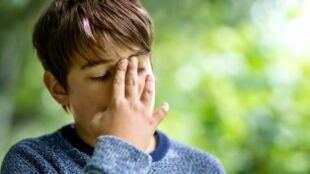
    A young boy in pain with a migraine for this article on homeopathy for the treatment of migraines.

    ABSTRACT

    Team

    Danno K, Colas A, Masson JL, Bordet MF.

    Objectives

    The study objective was to evaluate the effectiveness of homeopathic medicines for the prevention and treatment of migraine in children.

    Design

    This was an observational, prospective, open, nonrandomized, noncomparative, multicenter study.

    Setting/Location

    The study was conducted in 12 countries worldwide.

    Subjects

    Fifty-nine (59) physicians trained in the prescription of homeopathic medicines and 168 children, aged 5-15 years, with definite or probable migraine diagnosed using International Headache Society 2004 criteria were the subjects in this study.

    Interventions

    Physicians were given complete freedom in terms of treatment prescription; thus, prescriptions were individualized for each patient.

    Outcome Measures

    The frequency, intensity, and duration of migraine attacks in the 3 months prior to inclusion were compared with those during the 3-month follow-up period. Pertinent data were collected using questionnaires completed by the doctor and the patient or his/her parent/guardian. The secondary outcome measure was the impact of homeopathic medicines on education, measured as absence from school.

    Results

    The frequency, severity, and duration of migraine attacks decreased significantly during the 3-month follow-up period (all p<0.001). Preventive treatment during this time consisted of homeopathic medicines in 98% of cases (mean=2.6 medicines/patient). Children spent significantly less time off school during follow-up than before inclusion (2.0 versus 5.5 days, respectively; p<0.001). The most common preventive medicines used were Ignatia amara (25%; mainly 9C), Lycopodium clavatum (22%), Natrum muriaticum (21%), Gelsemium (20%), and Pulsatilla (12%; mainly 15C). Homeopathy alone was used for the treatment of migraine attacks in 38% of cases. The most commonly used medicines were Belladonna (32%; mainly 9C), Ignatia amara (11%; mainly 15C), Iris versicolor (10%; mainly 9C), Kalium phosphoricum (10%; mainly 9C), and Gelsemium (9%; mainly 15C and 30C).

    Conclusions

    The results of this study demonstrate the interest of homeopathic medicines for the prevention and treatment of migraine attacks in children. A significant decrease in the frequency, severity, and duration of migraine attacks was observed and, consequently, reduced absenteeism from school.

    Source: Homeopathic treatment of migraine in children: results of a prospective, multicenter, observational study

  • Video: Solving Health Problems with Homeopathy

    Video: Solving Health Problems with Homeopathy

    In this short video from the UK Faculty of Homeopathy, retired GP, Jeremy Swayne talks of his experience of using homeopathy in his general practice.

    (The main points from his story are summarised below the video.)

    In this video from the UK Faculty of Homeopathy, Retired GP, Jeremy Swayne, tells of how he:

    • First heard of homeopathy as a medical student on a ward round when it was disparaged
    • Then heard nothing more until he had been qualified for 12 years and a GP for 9 years.
    • Realised at that time he needed a better understanding of the dynamics of illness – better than what his medical education had provided
    • Developed some additional skills in psychology and insights into the spiritual aspect of some illnesses
    • Wanted to respond more appropriately and effectively to the multifactorial and multifaceted stories of sickness in patients’ lives
    • Knows that conventional medicine only really contains diseases rather than bringing real relief and prescribes medicines that produce hard to tolerate side effects. Though sometimes beneficial, they don’t solve the problem.
    • Was, and is, excited to find a way to treat people that really does solve the problem – homeopathy
    • Finds homeopathy is not easy and it doesn’t always deliver the goods, mostly because its can be difficult to find the right prescription, BUT has no doubt that he achieved more for his patients with it than he would have been able to without it
  • Homeopathy and Headaches

    Homeopathy and Headaches

    Quick Bits…

    This pilot study showed homeopathy reduced the intensity and frequency of headaches for most participants. Some said it was complete cure.

    Read more | Comment

  • Headache, Migraine and Homeopathic Treatment

    Headache, Migraine and Homeopathic Treatment

    MigraineQuick Bits….

    Safe and simple medicine at your fingertips? Four studies and seventeen remedies help you use homeopathy.

    Read More | Comment

  • Homeopathy and Lupus

    Homeopathy and Lupus

    Quick Bit…

    The good doctors from the HomeopathyUK discuss lupus – an autoimmune disorder – and remedies for the associated symptoms of migraines and skin, joint and lung problems.

    Read more | Comment