
§ 51 This therapeutic law is rendered obvious to all intelligent minds by these instances, and they are amply sufficient for this end. But, on the other hand, see what advantages man has over crude Nature in her happy-go-lucky operations. How many thousands more of homoeopathic morbific agents has not man at his disposal for…
§ 121 In proving medicines to ascertain their effects on the healthy body, it must be borne in mind that the strong, heroic substances, as they are termed, are liable even in small doses to produce changes in the health even of robust persons. Those of milder power must be given for these experiments in…
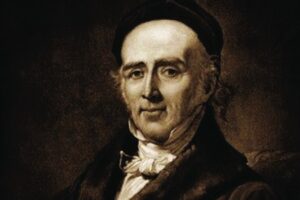
Written by Samuel Hahnemann, the founder of homeopathy, The Organon of Medicine is the cornerstone of homeopathic principles and practice, and used by homeopathy students and practitioners. We provide this important book here free of charge and in digital format, so that it can be enjoyed by all interested in homeopathy. Introduction Aphorism 1 to…
§ 61 Had physicians been capable of reflecting on the sad results of the antagonistic employment of medicines, they had long since discovered the grand truth, THAT THE TRUE RADICAL HEALING ART MUST BE FOUND IN THE EXACT OPPOSITE OF SUCH AN ANTIPATHIC TREATMENT OF THE SYMPTOMS OF DISEASE; they would have become convinced, that…
§ 181 Let is not be objected that the accessory phenomena and new symptoms of this disease that now appear should be laid to the account of the medicament just employed. They owe their origin to it1 certainly, but they are always only symptoms of such a nature as this disease was itself capable of…
§ 21 Now, as it is undeniable that the curative principle in medicines is not in itself perceptible, and as in pure experiments with medicines conducted by the most accurate observers, nothing can be observed that can constitute them medicines or remedies except that power of causing distinct alterations in the state of health of…
§ 101 It may easily happen that in the first case of an epidemic disease that presents itself to the physician’s notice he does not at once obtain a knowledge of its complete picture, as it is only by a close observation of several cases of every such collective disease that he can become conversant…
§ 91 The symptoms and feelings of the patient during a previous course of medicine do not furnish the pure picture of the disease; but on the other hand, those symptoms and ailments which he suffered from before the use of the medicines, or after they had been discontinued for several days, give the true…
§ 71 As it is now no longer a matter of doubt that the diseases of mankind consist merely of groups of certain symptoms, and may be annihilated and transformed into health by medicinal substances, but only by such as are capable of artificially producing similar morbid symptoms (and such is the process in all…
§ 81 The fact that this extremely ancient infecting agent has gradually passed, in some hundreds of generations, through many millions of human organisms and has thus attained an incredible development, renders it in some measure conceivable how it can now display such innumerable morbid forms in the great family of mankind, particularly when we…