

t

  • Know Your Remedies: Baptisia Tinctoria (Bapt.)

    Know Your Remedies: Baptisia Tinctoria (Bapt.)

    Baptisia-tinctoria-cropped Common Name: Wild indigo; rattleweed; horsefly weed.

    General Information

    Traditionally, Baptisia has been a remedy for serious infections or sepsis. It has also been used for types of diphtheria, flu, and typhoid fever. The person needing it is drowsy and falls asleep while responding to questions but also restless from body aches and pains. Delirium and confusion may also be present. The mouth or discharges (stool, perspiration, urine) have a putrid odour and the face confused and dusky in colour. Baptisia may be used with conventional medicines, without interactive or toxic side-effects.

    Mental-emotional

    • Drowsiness to the point of coma.
    • As if drunk, intoxicated, sleepy.
    • May respond to questions but falls asleep mid-sentence or immediately on answering.
    • Confused sensations and delusions about body – as if it is broken or double, separated or scattered, enlarged or twice its normal size, or limbs “talking” to each other.

    Face

    • Dull, confused, stupid expression.
    • Dark red congestion.

    Mouth and Throat

    • Putrid odour from mouth.
    • Ragged ulceration of tongue and throat.
    • Painlessness of ulcerated, inflamed throat.
    • Throat spasms – gagging on solid food but able to swallow liquids.

    Flu

    • Bruised and sore pains with muscles and joints.
    • Unable to get comfortable in any position – bed feels too hard (c.f. Arn; Rhus-t; Pyrog.).

    Where do I find it?

    Baptisia Tinctorial (Bapt.) is available from our online store as a single remedy in either liquids or pills.

    Home Treatment Guidelines

    Acute, Self-Limiting Conditions

    Conditions like colds or minor injuries, which are short-term and typically improve on their own, can be managed at home with homeopathy. However, in emergencies or if symptoms worsen, contact your healthcare provider.

    Chronic Conditions

    These home treatment instructions do not apply for ongoing issues, whether mentioned above or not, like persistent allergies or chronic pain. You should consult a qualified homeopath for a personalized treatment plan to achieve the best results with homeopathy for chronic conditions.

    How to Take the Remedy for Acute Conditions

    • Take one pill or five drops of the remedy. The frequency depends on symptom severity. As examples:
      • For life-threatening symptoms, take every 1 minute and seek emergency help immediately.
      • For mild symptoms, take every 4 hours.
    • Stop taking the remedy once you feel better. Resume if symptoms return.
    • If no improvement after four doses, choose a different remedy or consult a professional homeopath.
    • For more details on dosing, refer to: How Often to Dose with a 30C Homeopathic remedy.
    • For information on the different potencies, read: Guidelines on which potency to use

    Additional Notes From Past Masters

    Homeopathy is a 200-year-old system of medicine. Early homeopaths recorded detailed notes on how remedies worked, including initial tests, remedy relationships, and their experiences. These writings were shared to improve homeopathic practice and now offer fascinating insights into past uses of homeopathy. Here’s an example, edited and modernised for clarity, from Leaders In Homoeopathic Therapeutics (1898) by E. B. NASH M.D.:

    Leaders In Homoeopathic Therapeutics by E. B. NASH M.D.

    Baptisia Tinctoria (Bapt.)

    Mind confused; as if drunk; cannot collect himself; feels scattered about, cannot get pieces together.

    Face dark, dusky; eyes bleared, besotted expression.

    Mouth ulcerated, with foul smell; or, dry, tongue dry in a streak down the centre.

    Abdomen sensitive in right iliac region, with rumbling.

    Stool loose, and urine with all other discharges; very offensive.

    Awakes with oppressed feeling, must have more air.

    Great prostration with aching and soreness all over. Great typhoid remedy.

    Can swallow liquids only; least solid food gags.

    In whatever position the patient lies the parts rested upon feel sore and bruised. (Lach., Pyr.).

    * * * * *

    Baptisia tinctoria will quite naturally come in here, as it is often indicated after the Gelsemium stage is over in fevers.

    Typhoid fever can be aborted under proper homeopathic treatment, no matter what the old school says to the contrary. I have had but one case of typhoid fever run its full course in seven years, and that was a case of a young lady whose mother tried to treat her, until the disease was fully established.

    The symptoms indicating Baptisia are, in the first stage, great nervousness, chilliness, aching pains all over, but especially in head, back and limbs, and a sensation of soreness all over; feels as if bruised. Then the patient grows weak, prostrated, drowsy, becomes confused, the face and eyes suffused so as to give it a “besotted appearance”; the sensorium is so blunted that the patient falls asleep even before he can answer a question, or while he is in the middle of an answer.

    Then the tongue becomes streaked down the middle, at first white, even becomes brown in a well-defined streak down the middle, and as he comes more fully under the typhoid influence he mutters and reaches about the bed, tossing to and fro, and if he says anything he says he feels “scattered around the bed and is trying to get the pieces together.”

    Now the bowels begin to rumble, especially in the iliocaecal region, which is also sensitive to touch; later still the bowels begin to discharge, and all the discharges (stool, urine and sweat) are extremely offensive.

    This is a true picture of a Baptisia typhoid, and I have aborted in the first stage many cases and even checked their progress (in other cases) and cured them when they had been running eight to twelve days. I have used both the low and high preparations with equal success, but now use the 30th potency.

  • Remedies for Upper Respiratory Tract Infections

    Remedies for Upper Respiratory Tract Infections

    Quick Bits…

    Dig deep with this list of remedies for all sorts of coughs and colds. Choose the remedy that matches your symptoms.

    Read more | Comment

  • 20 Must-Have Remedies

    20 Must-Have Remedies

    Quick Bits…

    What would you include in a home-use kit? Here’s a list of homeopathic remedies that cover first-aid situations, infections, and constitutional imbalances.

    Read more | Comment

  • Drug Resistant Infections

    Drug Resistant Infections

    Quick Bits…

    “In the United States, two million people contract drug resistant infections annually, and 162,000 die from them…” What can homeopathy offer? A lot.

    Read more | Comment

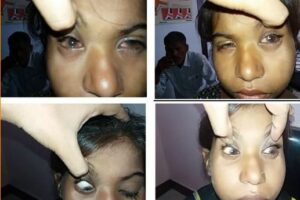
  • Case: Allergic Conjunctivitis

    Case: Allergic Conjunctivitis

    Quick Bits…

    An eye surgeon and ophthalmologist says, “after coming in contact with homeopathy … I have been able to cure many cases of allergic conjunctivitis with homeopathic treatment”.

    Read more | Comment

  • Research: Homeopathy for Ear Infections

    Research: Homeopathy for Ear Infections

    Have you ever had an ear infection? If so, you’ll know the urgency of treating the pain and inflammation as quickly as possible.

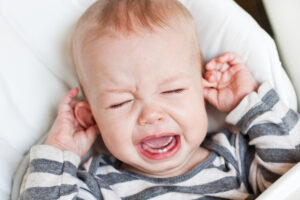
    Fortunately, homeopathy has the answer – even during the dead of night. All you need is a little knowledge of the basic remedies traditionally used by homeopaths for the problem.A screaming baby in pain from an ear infection

    Common earache remedies

    Aconite napellus (Acon.)

    Useful in the early stages of an ear infection, especially following exposure to cold, dry air. Rapid onset of symptoms. Intense symptoms. Person is restless, thirsty, anxious and sometimes frantic. Ear sensitive to touch. Worse at night, especially between 12-2am.

    Remember: Rapid onset; intense symptoms; restlessness; anxiety; thirst; worse after midnight.

    Check Availability

    Belladonna (Bell.)

    Often the right ear. Sudden onset of intense pain that may shoot or throb. Bright red ear or ear canal. Glassy eyes or dilated pupils. High fever. Often with headache. May become delirious in sleep, with nightmares. Hot head with cold hands and feet. Prefers the dark. Better for sitting rather than lying. Pain worse with light, noise, cold air, or being bumped.

    Remember: Rapid onset; intense symptoms; redness; often right-sided.

    Check Availability

    Calcarea carbonica (Calc.)

    Earache or glue ear that follows colds. Child is usually obstinate, pale and pudgy with a large head that sweats easily, especially during sleep. Anxious on thinking about unpleasant things. Often craves eggs and sweets or is sensitive to milk.

    Remember: Obstinate; timid; pudgy; sweaty head or neck (in sleep).

    Check Availability

    Chamomilla (Cham.)

    Unbearable pain. Anger and impatience with the pain. Demand many things but push them away when offered. Can’t be pleased – nothing will satisfy. Cannot be comforted except by being carried or rocked briskly. One cheek red, the other cheek pale. Earache may occur with teething. Worse at night and for warmth.

    Remember: Cannot be pleased; anger and impatience; better when carried briskly.

    Check Availability

    Hepar sulphuris (Hep.)

    For chronic ear infections rather than in first stage. Ear is extremely sensitive to touch of any type and cold air. May cover head or lie on affected side to keep ear warm. Pain often sharp like a splinter. Irritability or tantrums. Thick discharge from nose or ear smells like old cheese. Pain worse at night. Remedy may be needed to finish a cure started by Mercurius solubilis.

    Remember: Older infection; irritable; sensitive to cold and touch; ‘old cheese’ odour.

    Check Availability

    Kali bichromicum (Kali-bi.)

    Sharp, stitching or stinging pains. Intense itching or tickling inside ear. Thick, yellow and foul smelling discharge, often stringy. Irritable. Sweaty. Feels cold.

    Remember: Itching; stringy or offensive discharges; sweaty; irritable; chilly.

    Check Availability

    Mercurius solubilis (Merc.)

    For chronic ear infections rather than the first stage. Often right sided. May be discharge of pus that will be thick, burning, and have an offensive odor. Pus usually green though sometimes yellow. Thirsty. Bad breath. Salivation. Perspiration. Tongue flabby with imprint of teeth on edges. Glands or tonsils may be swollen. Sensitive to extremes of temperature. Pain worse at night.

    Remember: Older infection; bad breath; flabby tongue; salivation; offensive discharges (if present).

    Check Availability

    Pulsatilla (Puls.)

    Clingy. Seeks sympathy, company, and reassurance. Ear pain worse at night and in a warm room, better in open air. Worse for warm applications. Little or no thirst. Changeable moods. Thick, yellowish-green, bland discharge from nose if a cold is present or from the ear in advanced stages.

    Remember: Clinging, desires sympathy and comfort, thirstless, worse for warmth.

    Check Availability

    Silicea (Sil.)

    Difficulty in hearing that often improves with blowing the nose, yawning, or swallowing. Discharge of blood and pus. Smelly discharge. Dried crusts within the ear canal. Itching. Children bore their finger into the ear. Head sweats during early sleep.

    Remember: Itching; difficulty in hearing; sweaty head in sleep.

    Check Availability

    A note of caution on antibiotics

    The pain from ear infection and inflammation often starts in the middle of the night, limiting conventional treatment options – and should you eventually obtain some antibiotics, you might be in for a disappointment. Recent research indicates they are no more effective than simply waiting for the infection to pass.[1]

    Research: A safer and more effective alternative

    Four studies showed that homeopathic remedies relieved earaches and infections, and worked faster than antibiotics. Symptoms improved rapidly, often within hours of the remedy being given and without the introduction of new problems. One of the trials also showed that children whose earaches were treated with homeopathy were less likely to have their infection return.[2] [3] [4][5]

    So what can you do in the middle of the night?

    With a simple range of homeopathic remedies – all found in basic homeopathic home-use kits – a lot of pain and discomfort could be avoided. Parents and carers could learn to safely treat many simple acute problems such as ear infections, even in the middle of the night – and families would get a lot more sleep.

    Some of the common remedies for earaches and ear infections are listed above. A link to instructions on how often to give a homeopathic remedy has been placed at the end of the list.

    If you are unsure …

    If none of these remedies seem to suit you or your child’s symptoms, please see a qualified homeopath for a better-matching remedy, and if there is any indication that the problem is more than just a simple ear infection, please see a healthcare practitioner for further advice.

    Other resources

    1.Learn how often to use homeopathy with acute problems such as an uncomplicated ear infection by reading How Often Should I take a Dose of My Remedy.

    2.Read accounts of children treated at the Homeopathy Plus clinic for their ear (and other) problems.

    References

    1. McCormick, D.P, Chonmaitree, T, Pittman, C, Saeed, K, Friedman, N.R, Uchida, T, Baldwin, C.D. Nonsevere acute otitis media: a clinical trial comparing outcomes of watchful waiting versus immediate antibiotic treatment. Pediatrics June 2005; 115(6):1455.

    2. Frei, H, and Thurneysen, A. Homeopathy in Acute Otitis Media in Children: Treatment Effect or Spontaneous Resolution? British Homeopathic Journal, October, 2001,90:180-182.

    3. Friese, KH, Kruse, S, Moeller, H. Acute Otitis Media in Children: A Comparison of Conventional and Homeopathic Treatment,‖ Biomedical Therapy, 1997,15,4:113-122 (reprinted from Hals-Nasen-Ohren (HNO), August, 1996:462-66.

    4. Jacobs, J, Springer, DA, Crothers, D. Homeopathic Treatment of Acute Otitis Media in Children: A Preliminary Randomized Placebo-controlled Trial, Pediatric Infectious Disease Journal, 20,2 (February 2001):177-183.

    5. Randomized controlled pilot study to compare Homeopathy and Conventional therapy in Acute Otitis Media

  • Four Ear Infections – Four Different Remedies

    Four Ear Infections – Four Different Remedies

    Homeopathy treats different conditions with the one remedy or, conversely, treats one condition with different remedies depending on the symptoms of the sufferers.

    The cases presented in Four Problems – One Solution, show how three people and one dog, in spite of differing problems and diagnoses, each received the same homeopathic remedy.

    In this article, four people with the one diagnosis of middle ear infection (otitis media) each receive a different homeopathic remedy for its treatment- and we show why.


    Case 1 – Ben, the Boy Who Needed Belladonna

    Ben was a six-year-old boy was brought into the clinic after a night of screaming from ear pain. His right ear was bright red, his eyes “glassy”, and he had a fever. A doctor had diagnosed otitis media, a middle ear infection, and provided a script for antibiotics.

    Ben’s mother said his ear infections were a regular occurrence, several times through most winters. This year she wanted to try something different because though antibiotics had relieved the infections in the past, they had always returned once the course was finished.

    Ben had been angry with the pain, hitting his head with his hand, and shrieking. His mother said he had worsened when she tried to lay him down to calm him.

    Ben told me that his ear was still sore but not as bad as the throbbing pain of the night before. An inspection showed a red and bulging ear-drum.

    Ben was given the homeopathic remedy, Belladonna. The instructions were to repeat it as often as every two hours if needed. Ben was given two doses of the remedy before bedtime and went to sleep easily.

    Later that night, he woke, distressed and in pain. His mother gave another dose of Belladonna and within ten minutes he was asleep. Ben one more dose of Belladonna the following night after which he had not further episodes of ear pain.

    Reasons for Choosing Belladonna

    Belladonna is a useful remedy when symptoms are intense and accompanied by heat, redness, and throbbing pain. Complaints often arise on the right side of the body, feel better when elevated, and worsen when the person lies down. Children may hit themselves from anger or pain.

    Belladonna treats a range of acute and chronic problems when the symptoms confirm its selection. Key symptoms relating to Belladonna can be read in the Know Your Remedies section of the website.


    Case 2 – Ruby, the Girl Who Needed Pulsatilla

    Four-year-old Ruby had been unsettled with ear pain and a low grade fever for about three days. She had become grizzly and whiney, only happy if cuddled by her mother.

    On inspection, her eardrum was dull in colour and bulging rather than having a flat, healthy white sheen.

    Ruby’s doctor had diagnosed a middle ear infection but was reluctant to give antibiotics. He said that ear infections usually resolved on their own and as most were caused by a virus rather than bacteria, antibiotics often didn’t help.

    While true, this did not help Ruby or her mother’s current situation so she decided to try homeopathy.

    Ruby’s cheeks were flushed, something her mother said was not unusual. She generally disliked warm rooms and with this ear infection, preferred to be in cooler rooms or outside in the cold air.

    Ruby received a prescription of Pulsatilla, a homeopathic remedy prepared from the wind flower. Over the next two days she was given five doses during which time she became happier, was less clingy, and stopped complaining of ear pain.

    Reasons for choosing Pulsatilla

    Those who need Pulsatilla crave love and affection. Children want to be held and cuddled by their parents. They are affected by warm stuffy rooms, flush easily, and prefer cool, open air. Ear infections often follow colds and may be accompanied by conjunctivitis.

    Pulsatilla treats a range of other acute and chronic problems when symptoms confirm its selection. Key symptoms relating to Pulsatilla can be read in the Know Your Remedies section of the website.


    Case 3 – Kurt, the Boy Who Needed Hepar Sulph

    Eight-year-old Kurt was brought into the clinic by his mother who wanted to ‘get on top’ of his recurring infections, especially his current ear infection.

    Kurt was prone to tonsillitis- several times a year. With each episode, an acute ear infection usually followed. The pain would be intense, waking him from sleep, often with a scream.

    Kurt’s mother said cold winter days were the worst, especially if he could not keep his head warm.  He would travel to school with a beanie pulled over his ears and at night would sleep with the covers over his head. If an infected ear was exposed to the cold air, it could trigger intense stabbing pains.

    Kurt was irritable and surly when unwell and seemed to ultra-sensitive to pain. During episodes of tonsillitis, the glands of his neck would swell and his breathe smelt of “old cheese”. Infections, whether colds, tonsillitis, ear infections or cuts, would take “forever” to resolve.

    Kurt was given the homeopathic preparation of Hepar sulphuris calcareum, often abbreviated to Hepar sulph for his acute ear infection. The remedy was to be repeated every 4 hours, if needed. At the next appointment, Kurt’s mother reported that both tonsillitis and ear infection had settled within 2 days of starting the remedy.

    Hepar sulph was continued for Kurt in reducing doses beyond the ear infection as it suited the chronic nature of his recurring infections. The following winter, it was reported that he had been infection-free.

    Reasons for Choosing Hepar Sulph

    Hepar sulph is a useful remedy for those troubled with easy or chronic infections. Pains are described as sharp, stabbing, or splinter-like, and discharges or breathe may have a cheesy odour. The person will be sensitive to the cold, especially around the head, and often be irritable.

    Hepar sulph treats a range of acute and chronic problems when the symptoms confirm its selection. Key symptoms relating to Hepar sulph can be read in the Know Your Remedies section of the website.


    Case 4 – Kahlia, the Girl Who Needed Calcarea Carbonica

    Kahlia was a four-year-old girl who had been placed on the ‘grommet waiting list’. (Grommets are tiny tubes inserted through the ear-drum of children with glue-ear to help drain fluid so that the ear drum vibrates freely with sound, allowing the child to hear.)

    Kahlia had a history of repeated middle ear infections which, in spite of repeated antibiotics, never fully cleared. Her infections routinely occurred after a cold. Usually there were few symptoms except for mild fevers and the occasional tugging at an ear.

    Kahlia’s father was looking for a different option as he did not want her on another course of antibiotics. He described Kahlia as a placid but cautious child. She enjoyed staying at home with her mother and would entertain herself for hours as long as she could see her Mum. She was shy with strangers new situations until she felt comfortable.

    Kahlia had been slower than average in achieving her milestones and had suffered from periods of eczema. She was plump in build and had a tendency to sweat around her head especially when sleeping.  She loved milk and soft boiled eggs.

    At her homeopathy appointment, Kahlia was pulling her right ear from another bout of ear infection.  Her nose was running and excoriated from a cold. Her hands were cold and clammy.

    Calcarea carbonica, often shortened to Calc carb, was prescribed as a potential remedy for Khalia’s symptoms. By the following day, after 2 doses, her father reported that her nose was dry and she was no longer pulling her ear.

    Following this, the remedy continued to be given at weekly intervals for 3 more doses until Khalia next saw her doctor. His examination revealed her ears were clear. The day surgery for the insertion of grommets was cancelled.

    Reasons for Choosing Calcarea Carbonica

    Children needing Calc carb are usually shy, placid, plump and sweaty. Symptoms relating to repeated ear infections tend to be mild so that a diagnosis is often missed until hearing difficulties from glue ear develop.  These children frequently crave milk and love eggs.

    Calc carb treats a range of acute and chronic problems when the symptoms confirm its selection. Key symptoms relating to Calc carb can be read in the Know Your Remedies section of the website.

  • 20 Must-have Remedies

    20 Must-have Remedies

    Quick Bits…

    What remedies would you include in a home-use kit? Here’s one list to get you started. It covers first-aid situations, infections, and general constitutional remedies.

    Read more | Comment

  • Canada: Free Homeopathy Course for Public

    Canada: Free Homeopathy Course for Public

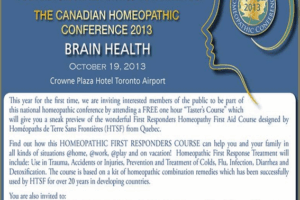
    CanadianConference_zps45cc6019Do you live in Canada? A free homeopathy course is available for the public – but register soon, because it runs on 19 October.

    As a special feature, this year’s Canadian Homeopathic Conference in Toronto will be offering an hour-long “Taster’s Version” of the Homeopathes de Terre Sans Frontieres’ “First Responder” Course.

    Developed over 20 years by this team of humanitarian homeopaths to respond to health needs in third-world countries, this course will start you off learning how to use homeopathic remedies to relieve colds, flu, diarrhea, infections, aid in detoxification and more.

    More Information: Free Public Event