
t

  • Tutorial 11 – Return of Old Symptoms

    Tutorial 11 – Return of Old Symptoms

    An image of Marie suffering from menopausal symptoms who's case highlights how symptoms can sometimes disappear in reverse chronological order.

    In previous tutorials, we’ve discussed the Law of Similars, Vital Force, Direction of Cure, palliation, and suppression. This tutorial will demonstrate how these concepts come into play in the story of Marie, a woman experiencing a mid-life crisis who managed to turn her life around. Her case exemplifies how an individual’s lifelong symptoms can disappear in reverse chronological order with the proper homeopathic treatment.

    Marie and Menopause

    Marie was a woman entering menopause, and her symptoms were making life unbearable. She experienced up to 20 hot flashes per day, which left her drenched in sweat, cold, and clammy. She felt a burning sensation in her palms and the soles of her feet, as if they were dipped in hot water. At the peak of each hot flash, she craved cold drinks. Sleep had eluded her since the hot flashes began.

    Marie also complained of low energy, difficulty concentrating, and a terrible memory. She was irritable and moody, and her husband bore the brunt of these changes, causing strain in their marriage.

    Upon questioning, I learned that Marie also had asthma since her late 20s, using inhalers for prevention and control. She had to be cautious around flowers, as their fragrance could induce wheezing. Additionally, she experienced regular, pulsating migraines on her right side, which began in her neck and moved up to her forehead and eye. Nausea often accompanied these migraines, and belching or vomiting provided only temporary relief. She craved sour things and preferred lying in the dark. Sleep would eventually alleviate the migraine. The frequency and intensity of these migraines had lessened since menopause began.

    Following the Prescription…

    Marie’s menopausal symptoms aligned with those treated by the homeopathic remedy Sanguinaria Canadensis. Within a week of taking the remedy, her hot flashes reduced by half, and her energy increased significantly. I advised her to continue the treatment.

    At Marie’s first follow-up appointment, several interesting developments emerged. Her hot flashes had further decreased to one or two mild episodes per day, and the burning in her hands and feet had vanished. With these improvements, her sleep quality also improved. Her asthma was less problematic, and she could breathe deeply and easily. However, she was worried about other recent occurrences.

    After our previous phone call, Marie had a severe migraine, similar to those she experienced before menopause. Additionally, her right shoulder, which had been pain-free since receiving a cortisone injection years prior, was causing discomfort. She was concerned that these issues signaled a return to her previous painful experiences.

    Furthermore, although her asthma had improved, it was replaced by hay fever, which she hadn’t experienced since her mid-20s. As a child, hay fever had been a significant issue for her, requiring extensive medication. At 26, she underwent surgery to remove nasal polyps caused by hay fever. The condition subsided soon after, and she had been symptom-free ever since – until now.

    Other returning symptoms included one-day bouts of dizziness when turning her head suddenly and painful heartburn after evening meals. Marie worried these symptoms could fully return. What was happening?

    What Does it all Mean?

    When a homeopath hears a patient mention the return of past symptoms, excitement arises because the outcome is likely to be positive. The “return of old symptoms” signifies that the homeopathic remedy has stimulated the Vital Force to heal not only the current issue, but also to address suppressed layers of ill-health accumulated over time.

    Previous tutorials have explained that choosing medicines that suppress rather than support our symptoms can work against our body’s healing efforts. While suppression provides short-term relief, it cannot heal deep energetic imbalances. Instead, suppression leads to deteriorating health, weakening our vitality and making us more susceptible to disease and other health problems in the future.

    This is precisely what happened to Marie.

    Her hay fever had never been truly healed, only partially suppressed. With this avenue no longer available, Marie’s Vital Force sought a new way to alleviate its energetic imbalance and found nasal polyps. When the polyps were surgically removed, asthma became the next outlet.

    The story continued with shoulder pain, vertigo, migraines, menopausal symptoms, confusion, poor memory, and mood changes. Persistent suppression and weakened vitality eventually impacted her brain and hormonal system.

    The appropriate homeopathic remedy reversed Marie’s downward spiral. Today, she is a healthy and happily married menopausal woman who continues to use homeopathy as her primary treatment whenever necessary.

    Sanguinaria Canadensis – What a Remedy!

    Homeopathic Sanguinaria is derived from an herb naturally found in the United States, Canada, and India. Commonly known as Bloodroot, this remedy is unique in that many of its symptoms appear on the right side of the body. Homeopathic Sanguinaria can treat health complaints such as: headaches and migraines; hay fever; asthma; reflux and heartburn; coughs, bronchitis, and pneumonia; bursitis and shoulder pain; nasal polyps; tuberculosis; and menopausal symptoms.

    Individuals requiring Sanguinaria may have low energy, feel irritable, and struggle with concentration. They might crave cold water and spicy or sour food. Burning sensations are typical, especially during hot flashes, in the palms and soles, with heartburn and hay fever, or accompanying vaginal or penile discharges. The sensation is often described as being burnt by hot water or steam. Strong odors or flower pollens can trigger hay fever and asthma, which are commonly followed by diarrhea.

    Tutorials

    1. Homeopathy: an Introduction
    2. Tutorial 1 – The Law of Similars
    3. Tutorial 2 – Law of Similars Discovered
    4. Tutorial 3 – Potentisation
    5. Tutorial 4 – Three Scales of Potency
    6. Tutorial 5 – Benefits of Potentisation
    7. Tutorial 6 – Provings
    8. Tutorial 7 – The Vital Force
    9. Tutorial 8 – Potentised Remedies and the Vital Force
    10. Tutorial 9 – Palliation, Supression or Cure?
    11. Tutorial 10 – Direction of Cure
    12. Tutorial 11 – Return of Old Symptoms
    13. Tutorial 12 – Homeopathy and Other Medicinal Therapies
    14. Tutorial 13 – Finding a Good Homeopath
    15. Tutorial 14 – That First Appointment
    16. Tutorial 15 – What to Expect (Part A)
    17. Tutorial 16 – What to Expect (Part B)
  • Study: Homeopathy for Asthma, Eczema, Food Intolerances, and Hay Fever

    Study: Homeopathy for Asthma, Eczema, Food Intolerances, and Hay Fever

    Highlights

    • This longitudinal observation study from Italy looked at the effects of homeopathic treatment on the asthma, allergic rhinoconjunctivitis, atopic dermatitis (AD) and  food intolerances of 213 children drawn from a hospital-based homeopathic clinic.
    • 104 children were available for followup over the 8-year period with most reporting a major improvement or resolution.
    • The researchers stated that data from the literature appeared to show that paediatric patients treated with homeopathy had a reduced tendency to maintain AD and develop asthma (and allergic rhinitis) in adult age. This data appeared to be confirmed by their study.

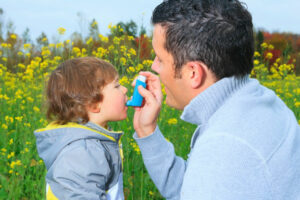
    A little boy with asthma inhaling from his puffer.

    ABSTRACT

    Aim

    To study the socio-demographic features, the prescribed remedies and the outcome of atopic diseases in children treated with homeopathy at the Homeopathic Clinic of Lucca (Italy), and the long-term outcome of children suffering from atopic dermatitis (AD) after an approximate 8-year period (range 5-10 years).

    Methods

    Our data derive from an observational longitudinal study carried out on 213 children (38.6%) with atopic diseases out of 551 children consecutively examined from September 1998 to December 2008.

    We used the Glasgow Homeopathic Hospital Outcome Score to evaluate the results that were classified on the basis of a Likert scale.

    Results

    Eighty-three (39%) children were affected by asthma, 51 (24%) by allergic rhinoconjunctivitis, 76 (36%) by AD and 3 (1%) by food intolerance.

    Follow-up patients were 104 (48.8%), and 65 (62.5%) of them reported a major improvement or resolution.

    The parents of paediatric patients suffering from AD, who had started homeopathic treatment at <4.9 years of age were invited to follow-up assessment 8 years later and 40 children (mean age 12.9) were examined; 28/40 (70%) had a complete disappearance of AD, 12/40 children (30.0%) were still affected by AD; 8/40 (20%) had asthma and 8/40 patients had, or developed, allergic rhinitis.

    Conclusion

    These preliminary results seem to confirm a positive therapeutic effect of homeopathy in atopic children.

    Furthermore, according to the data from the literature paediatric patients treated with homeopathy seem to show a reduced tendency to maintain AD and develop asthma (and allergic rhinitis) in adult age.

    Journal Purchase Point for Full Report: Homeopathy in paediatric atopic diseases: long-term results in children with atopic dermatitis

  • Studies: Homeopathy and Hay Fever

    Studies: Homeopathy and Hay Fever

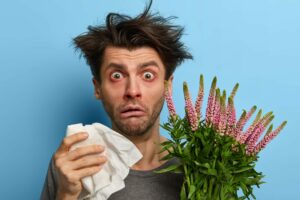
    A man holding flowers and a tissue suffering from hayfeverSeveral studies indicate that homeopathy could be the treatment of choice for allergies.

    It alleviated the symptoms of hay fever and other hypersensitivity disorders, improved quality of life, and without side-effects.

    Study 1

    Research published in 1986 in the prestigious Lancet medical showed that homeopathically prepared doses of 12 common flowers effectively reduced hay fever symptoms when compared to patients given a placebo. Those who received the placebo had six times as many symptoms to those given the homeo pathic medicine. 1

    Study 2

    Research published in the British Medical Journal (2000) found that those given the substance to which they were allergic, in homeopathic potency, experienced significant improvement in symptoms compared to what was normally experienced by those given a steroidal medication. 2

    Study 3

    Homeopathy was shown to be at least as effective as conventional medical treatment in a 2006 Norway study involving 200 patients suffering from hypersensitivity disorders that included asthma, eczema, urticaria, hay fever and other allergies. Following completion of the trial, symptoms had improved in two thirds of the homeopathically treated patients. Most of those treated conventionally were worse with only one experiencing an improvement. Patients in the homeopathic group also reported greater improvements in their overall state of health, psychological outlook, and quality of life compared to the conventionally treated group. 3

    Study 4

    A study involving 40 people diagnosed with moderate to severe hay fever showed symptom improvement over a 4 week period that was above and beyond placebo response. Subjects reported no adverse effects from the remedy. 4

    1 Reilly, D, “Is homoeopathy a placebo response? Controlled trial of homoeopath ic potency, with pollen in hayfever as model,” Lancet, October 18, 1986, ii: 881-6.
    2 Taylor, MA, Reilly, D, Llewellyn-Jones, RH, et al., Randomised controlled trial of homoeopathy versus placebo in perennial allergic rhinitis with overview of four trial Series, BMJ, August 19, 2000, 321:471-476.
    3 Launsø L, Kimby CK, Henningsen I, Fønnebø V. An exploratory retrospective study of people suffering from hypersensitivity illness who attend medical or classical homeopathic treatment. Homeopathy, 2006, 95:73-80.
    4 Kim LS, Riedlinger JE, Baldwin CM, Hilli L, Khalsa SV, Messer SA, Waters RF.  Treatment of seasonal allergic rhinitis using homeopathic preparation of common allergens in the southwest region of the US: a randomized, controlled clinical trial.  Ann Pharmacother. 2005 Apr; 39,4:617-24.
  • Research: Homeopathy for Children’s Asthma, Eczema, and Hay Fever

    Research: Homeopathy for Children’s Asthma, Eczema, and Hay Fever

    Highlights

    • The atopic diseases of asthma, hay fever and eczema are the most common chronic diseases experienced by children.
    • In recent decades, asthma and allergy have reached epidemic proportions in most Western societies.
    • Studies indicate that half of those with atopic diseases try alternative treatments. Homeopathy is the commonly used therapy for children.
    • This longitudinal study conducted by doctors at a homeopathic clinic of a Lucca (Italy) hospital clinic studied the results of homeopathic treatment for 325 children with an atopic disease.
    • The study ran between 1998 to 2014.
    • 78.5% of children either went back to normal or had a moderate to major improvement in their condition.
    • with long-term followup, 70.1% of children went on to complete remission.

    A young girl suffering from asthma

    ABSTRACT

    Team

    Elio Rossi, Marco Picchi, Paola Bartoli, Marialessandra Panozzo, Chiara Cervino, Linda Nurra

    Aim

    To study the outcomes of atopic diseases in children treated with homeopathy at the Homeopathic Clinic of Lucca (Italy) and related long-term results after approximately an 8-year period.

    Materials and Methods

    Our data derive from an observational longitudinal study carried out on 857 pediatric patients who consecutive visited from 1998 to 2014. Children with atopic diseases were 325 (37.9%), 126 (39%) suffered from atopic dermatitis, 72 (22%) from allergic rhinitis, and 127 (39%) from asthma. Moreover, a long-term study was conducted on a subset of 107/165 patients, consecutively visited from 1998 to 2006, and with ≥5 years follow-up. The study also investigated the evolution of overall symptoms in those patients with a complex atopic symptomatology.

    Results

    75.8% of atopic children had moderate or major improvement (67.1% with asthma as the primary disease; 84.2% rhinitis; 84.2% dermatitis). At re-evaluation after 5-10 years, complete remission of atopic symptoms was obtained in 70.1% of the children: 84.2% in dermatitis; 48.1% in allergic rhinitis; 71.4% in asthma. Children with two or three atopic diseases at the first visit were completely cured in 40% of cases.

    Conclusion

    The results seem to confirm that homeopathic medicine produces positive therapeutic response in atopic children.

    Full Paper Purchase: Homeopathic therapy in pediatric atopic diseases: short- and long-term results

  • Multiple Health Problems Improve

    Multiple Health Problems Improve

    Sinusitis, Headaches, Hay Fever, High Blood Pressure, Rising PSA Levels, Insomnia and Anxiety

    A decorative image highlighting that Barry's symptoms of hayfever, headaches and more improved with the right remedy.

    Homeopath’s Report

    Barry’s story shows the widespread changes that can happen when a remedy is chosen for the patient’s overall symptom complex, rather than just a few isolated symptoms. In Barry’s instance, he only needed the one remedy, Natrum muriaticum (Nat-m.) in this instance, in a range of potencies and the results were extremely good. For others, a series of remedies may be needed to achieve the same improvements – it all depends on whether the symptoms change or stays the same during treatment.

    Barry started his treatment knowing only a little about homeopathy. Like many people he thought of homeopathy as being similar to herbal medicine, relying on plant-based remedies. In fact, homeopathy draws its remedies from many kingdoms – animal, vegetable, mineral, and “imponderables”. The remedy that was helpful for Barry was a potency prepared from a mineral salt.

    Fran Sheffield  (Homeopath)

    Barry’s Story

    I did not start by approaching a homeopath for treatment. My introduction was in attending a homoeopathy workshop principally in support of my wife who was interested to see if this alternative resource could help a member of our family who has autism.

    Being impressed by the presentation I did subsequently seek a consultation which I particularly liked because it dealt in some detail with the causative factors. An hour and a half’s consultation probed issues of what might be considered unrelated except this embraced the whole person in body mind and spirit. My experience with the conventional medical resource is that they deal only with the body and symptoms.

    My ailments were multi-factorial albeit they might be considered minor. The main issue was blocked sinuses causing headaches and associated side-effects. This condition was exacerbated during spring due to the high pollen count in the atmosphere, also leading to hayfever. Medical help sought many years before offered only a temporary solution with surgery, removing the nose and cutting/removing cartilage. I remember asking the doctor how successful it would be and how long would the effects last. His response dissuaded me from taking this option even though I have now suffered with this complaint for 50 years.

    The homoeopathic treatment was an infinitely small dose of a natural herbal compound in a liquid form that that I was to take once a week. Within three weeks my sinuses were 85% clear! The improvements were however ongoing and other issues started to clear up as well. I have been on blood pressure tablets two years and with this medical drug my blood pressure had been lowered from 180/105 down to approximately 155/85.

    Now, approximately eight weeks after starting homoeopathy my blood pressure is 113/73 and I shall have to get my doctor to reassess my dosage or even cease all medication. Furthermore, my regular prostate tests have shown a PSA of 5.5, 6.0, and 7.9, progressively increasing over the last three years, supposedly age-related. My recent tests reported a PSA 5.0. My sinus now varies between 95% and 100% clear. Several other issues I referred to as multifactorial have also improved or disappeared.

    Other body functions have changed (for the better) as well. I now sleep the night through and have found a softening in anxiety. Situations that worried me no longer affect me emotionally. In spite of these improvements I am told that my treatment hasn’t finished yet, so is homoeopathy good or is it good?

  • Merlin and the Red Onion – Homeopathy for Hay Fever

    Merlin and the Red Onion – Homeopathy for Hay Fever

    Quick Bits…

    “I sat him down and what unfolded was his horrendous history of hay fever and how badly it affects him.”

    Read more| Comment

  • Study: Homeopathy for Allergies

    Study: Homeopathy for Allergies

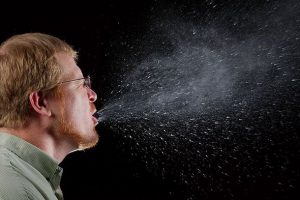
    A man sneezing due to allergies Quick Bits…

    The symptoms and treatment costs of asthma, eczema, hay fever, allergic rhinitis, food allergies and other allergies types were reduced by these homeopathic remedies.

    Read more | Comment

  • Know Your Remedies: Sabadilla (Sabad.)

    Know Your Remedies: Sabadilla (Sabad.)

    Common Names: Cevadilla seed.

    General Information

    Sabadilla is a remedy for unusual imaginings, hay fever or other allergies, and worms (not necessarily together). Physical symptoms such as headaches and sore throats start on the left and move to the right side. Symptoms may also appear periodically such as with every new or full moon. The person needing Sabadilla feels chilly, wants warm drinks and may either crave or dislike onions.

    Mental-Emotional Symptoms

    • Nervous, timid, sensitive and imaginative.
    • Strange and unusual imaginings such as parts of the body are smaller than they should be; parts of the body are deformed when they’re not; they are pregnant when not; they have some sort of disease when they don’t.

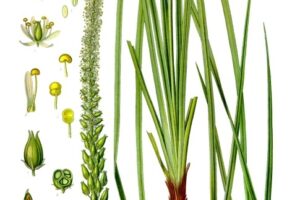
      Sabadilla
      Attribution: Franz Eugen Köhler, Köhler’s Medizinal-Pflanzen

    Eye

    • Watering from sensitivity to light.
    • Tears with pain.

    Nose

    • Hay fever where the sneezing is the main symptom.
    • Hay fever with persistent, abortive, violent or spasmodic sneezing.
    • Hay fever from the odour of flowers or newly mown grass.
    • Hay fever that involves the sinuses.
    • Hay fever that improves in warm rooms but worsens in open air.
    • Itching, tingling and tickling – must rub.

    Throat

    • Pain starts on the left side. Relieved by warm drinks.
    • Swallowing caused by a sensation of a lump or loose piece of skin.

    Chest

    • Asthma from hay fever.

    Gastrointestinal

    • Worm infestations.
    • Worm infestations that cause twitching or trembling.
    • Worm infestations in women that stimulate sexual desire.
    • Itching in the anus alternating with itching in nose or ears.

    Where do I find it?

    Sabadilla (Sabad.) is available from our online store as a single remedy in either pills or liquid, and as part of the following Complexes (combination remedies): Hay Fever; Worms (Pin or Thread).

    Home Treatment Guidelines

    Acute, Self-Limiting Conditions

    Conditions like colds or minor injuries, which are short-term and typically improve on their own, can be managed at home with homeopathy. However, in emergencies or if symptoms worsen, contact your healthcare provider.

    Chronic Conditions

    These home treatment instructions do not apply for ongoing issues, whether mentioned above or not, like persistent allergies or chronic pain. You should consult a qualified homeopath for a personalized treatment plan to achieve the best results with homeopathy for chronic conditions.

    How to Take the Remedy for Acute Conditions

    • Take one pill or five drops of the remedy. The frequency depends on symptom severity. As examples:
      • For life-threatening symptoms, take every 1 minute and seek emergency help immediately.
      • For mild symptoms, take every 4 hours.
    • Stop taking the remedy once you feel better. Resume if symptoms return.
    • If no improvement after four doses, choose a different remedy or consult a professional homeopath.
    • For more details on dosing, refer to: How Often to Dose with a 30C Homeopathic remedy.
    • For information on the different potencies, read: Guidelines on which potency to use
  • Know Your Remedies: Euphrasia Officinalis (Euphr.)

    Know Your Remedies: Euphrasia Officinalis (Euphr.)

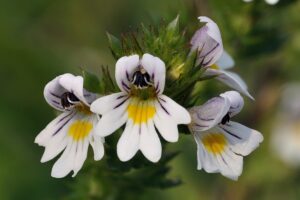
    Euphrasia 1Common Names: Eyebright; euphrasia.

    General Information

    Euphrasia Officinalis (Euphr.) is for catarrhal problems of the mucous membranes. It is an important hay fever and allergy remedy, especially when symptoms centre on the eyes but can also treat colds when the symptoms match. Symptoms in general are improved in the open air but are worse in the wind and in the evening.

    Eye Problems

    • Conjunctivitis with burning and swelling of lids.
    • Itching and burning of the margins of the lids.
    • Eyes are irritated by and sensitive to the light.
    • Rapid and frequent blinking to relieve irritation.
    • Acrid, burning, stinging tears or discharges (discharge from nose is bland).
    • Sticky mucus or pus in front of the eye – must blink rapidly to remove it.
    • Symptoms are relieved by bathing the eyes.
    • Sensation as if a hair hanging over the eye.

    Nasal Problems

    • Profuse bland discharge (while discharge or tears from eyes, burns).

    Cough

    • Coughing only during the daytime.
    • Cough with watery eye discharge.
    • Cough which is worsened by smoky air.
    • Cough relieved by lying down.

    Headache

    • Headache from catarrhal congestion.
    • Headache with profuse discharge from eyes and nose.

    For Pets

    • Profuse, irritating discharge from eyes which are sensitive to light.

    Where do I find it?

    Euphrasia Officinalis (Euphr.) is available from our online store as a single remedy, and as part of the following Complexes (combination remedies): Hay Fever; Conjunctivitis.

    Home Treatment Guidelines

    Acute, Self-Limiting Conditions

    Conditions like colds or minor injuries, which are short-term and typically improve on their own, can be managed at home with homeopathy. However, in emergencies or if symptoms worsen, contact your healthcare provider.

    Chronic Conditions

    These home treatment instructions do not apply for ongoing issues, whether mentioned above or not, like persistent allergies or chronic pain. You should consult a qualified homeopath for a personalized treatment plan to achieve the best results with homeopathy for chronic conditions.

    How to Take the Remedy for Acute Conditions

    • Take one pill or five drops of the remedy. The frequency depends on symptom severity. As examples:
      • For life-threatening symptoms, take every 1 minute and seek emergency help immediately.
      • For mild symptoms, take every 4 hours.
    • Stop taking the remedy once you feel better. Resume if symptoms return.
    • If no improvement after four doses, choose a different remedy or consult a professional homeopath.
    • For more details on dosing, refer to: How Often to Dose with a 30C Homeopathic remedy.
    • For information on the different potencies, read: Guidelines on which potency to use

    Additional Notes From Past Masters

    Homeopathy is a 200-year-old system of medicine. Early homeopaths recorded detailed notes on how remedies worked, including initial tests, remedy relationships, and their experiences. These writings were shared to improve homeopathic practice and now offer fascinating insights into past uses of homeopathy. Here’s an example, edited and modernised for clarity, from Leaders In Homoeopathic Therapeutics (1898) by E. B. NASH M.D.:

    Leaders In Homoeopathic Therapeutics by E. B. NASH M.D.

    Euphrasia (Euphr.)

    The action of this remedy seems to center in the eyes. If you read the symptoms as laid down in “Hering’s Guiding Symptoms,” you would think that it would cure almost all possible affections of the eyes, acute or chronic conjunctivitis, iritis, kerato-iritis, spots, vesicles, pannus, etc., and so it will if indicated by the symptoms.

    In colds with cough and severe fluent coryza it will sometimes cure, but here the choice must be made between it and Arsenicum, Allium Cepa and Mercurius. (See Allium Cepa for comparison).

    In measles with watery eyes and fluent coryza it is sometimes the best remedy. I remember Dr. C. W. Boyce, of Auburn, N. Y., reporting great success with it in an epidemic in that city.

    He cured all his cases with it. So I went for the next epidemic in my vicinity with Euphrasia, and my failure was as marked as his success. It was not the remedy for my epidemic.

    But I know enough not to “go it blind” that way very long, and hunted up my simillimum. Then I succeeded, too. Look out, young man, for the remedy that is recommended for all cases of any disease, or you’ll “come down hard” some time.

    One very prominent characteristic in eye troubles for this remedy is a tendency to an accumulation of sticky mucus on the cornea, which is removed by winking.

    All cases of any kind attended with photophobia and lachrymation, with or without coryza, should suggest this remedy, or at least call it to mind.

    In the eye affections of Euphrasia the lids are often involved. Of course this is so with other remedies, such as Arsenicum, Apis, Rhus toxic., etc. Study up. one more symptom: Cough, sometimes dry, but generally loose, worse during the day, not troublesome at night. This is important, as more coughs are < at night.